

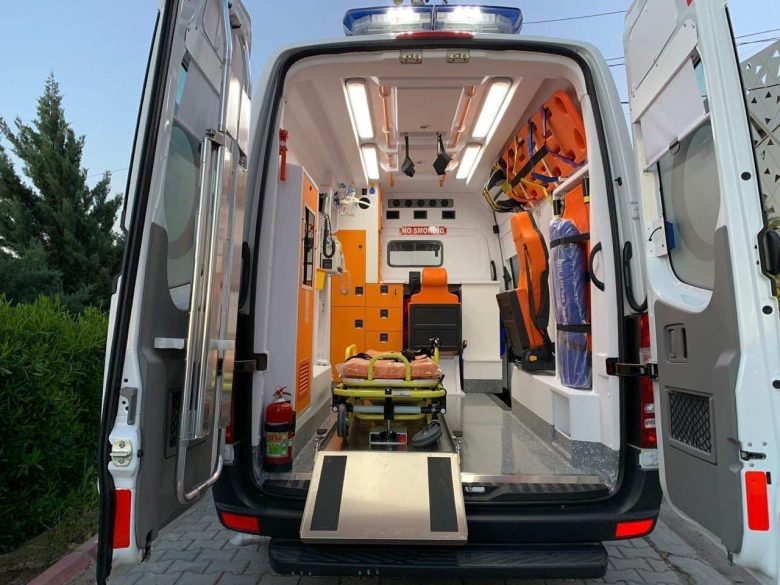
The transport‑health sector is set for a major overhaul, with the revision of its regulatory framework, a stronger push for home‑care support, the integration of paramedical skills and the upgrading of service quality singled out as key priorities by Minister of Health Mohamed Seddik Aït Messaoudène. In talks with the National Union of Healthcare‑Transport Facilities (UNETS), affiliated to the General Union of Algerian Workers (UGTA), he sketched these axes as part of a broader effort to professionalize and strengthen a segment that plays a central role in the care continuum.
Opening the session, the minister underlined that “we attach particular importance to the role of healthcare transport in the chain of care, especially in the development of home‑care support,” as he received the union’s delegation led by its president, Hammoud Abdel Fettah. The meeting followed a series of consultations with social partners aimed at reinforcing strategic components of patient‑care organization. Aït Messaoudène stressed the need to improve the sector’s structure to ensure real continuity of care, particularly for chronic and fragile patients who require follow‑up outside hospital settings.
He added that “the valorization of national competences, especially those trained in private paramedical schools, is a key lever for strengthening human resources in the sector,” and that phasing these professionals into various care structures, including home‑based models, will help meet rising demand and provide supervision that meets current standards. The gradual integration of these profiles, he said, will help organize the activity around clear professional standards and enhance the quality of services delivered to patients. The minister also praised the active role of UNETS and the pertinent proposals it has put forward to support the sector’s evolution.
Reiterating his ministry’s commitment to ongoing dialogue, he assured that professionals’ concerns will be examined seriously in a participative approach aimed at producing concrete, field‑adapted solutions. During the working session, the delegates detailed the constraints they face in daily operations, including fragmented organization, difficult working conditions and a regulatory framework that no longer matches the sector’s dynamics. The revision of the terms of reference governing healthcare transport was at the heart of the discussion, with union representatives emphasizing the urgency of updating this instrument to better regulate activity, clarify practice conditions and ensure services that meet quality and safety standards.
The talks also focused on home‑care support, which is increasingly seen as a strategic pillar for re‑organizing care provision. By bringing health services closer to citizens and relieving pressure on hospitals, this approach positions healthcare transport as a key actor in patient accompaniment and the continuity of medical follow‑up. Continuous training occupied a central place in the exchanges, with professionals calling for stronger training schemes and greater participation in scientific events so as to keep pace with technological and organizational changes in the sector.
Modernization of patient‑transport services was likewise treated as a priority. Participants underlined the need to upgrade equipment, optimize operational conditions and reinforce operational capacity, in order to provide swift, efficient and safe services. At the end of the meeting, both sides agreed to maintain regular, structured dialogue in order to examine the union’s proposals more deeply and identify concrete measures for improving sector performance. The move reflects a shared commitment to reinforcing the national health system and sustainably raising the quality of services for citizens, amid persistently high and demanding public expectations in the sphere of public health.