

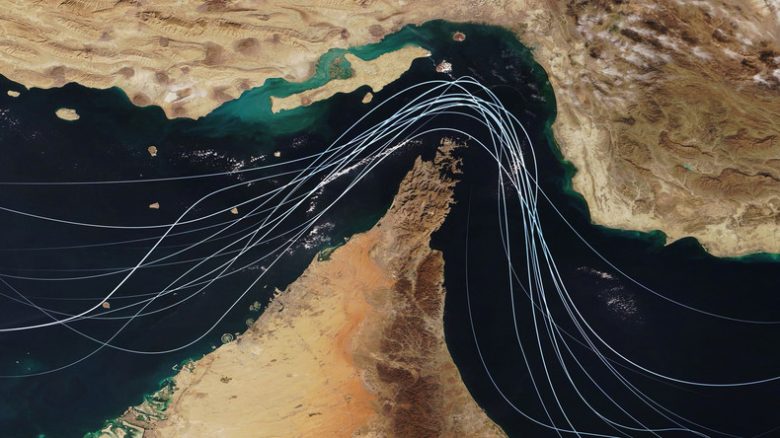
Iranian authorities aim to charge every country—without exception—”security fees” for safe transit through the Strait of Hormuz, NourNews reports citing sources. Friendly nations would only gain secure passage upon payment, a step to offset damages from the U.S.-Israeli aggression.
Iranian armed forces unleashed combined strikes on U.S. and Israeli military, operational, logistical, and industrial sites in the region, state TV reported, quoting the Islamic Revolutionary Guard Corps (IRGC). At sea, a missile hit an Israeli container ship, sparking a blaze. Attacks also targeted northern and southern Tel Aviv, key facilities in Haifa, chemical plants in Beersheba, and Israeli troop positions. Iran’s military struck a U.S. LHA7 helicopter carrier carrying over 5,000 sailors and marines, forcing it to retreat south toward the Indian Ocean.
Iran’s Foreign Ministry has drafted replies to ceasefire proposals from mediators, spokesperson Esmail Baghaei announced. Details will emerge “at the appropriate time.” He affirmed Tehran’s readiness to voice legitimate demands, clarifying that swift responses do not signal weakness, while dismissing pressure talks and Washington’s threats of war crimes.
The IRGC claimed hits on multiple U.S.- and Israel-linked sites across the Middle East. Strikes reached a refinery fueling Israeli jets, ExxonMobil and Chevron gas facilities in the UAE, and a U.S. petrochemical complex in Abu Dhabi. Iranian naval and aerospace units also pounded Gulf targets: a U.S. troop buildup near a Kuwaiti base, a vessel at UAE’s Jebel Ali port, and Israel-tied installations.
Tehran would mirror any U.S. strikes on Iranian infrastructure, Foreign Ministry spokesperson Esmail Baghaei warned. In such cases, Iran’s forces would target all U.S.-owned or affiliated assets. He framed these as defensive responses to enemy violations, not personal vendettas.