

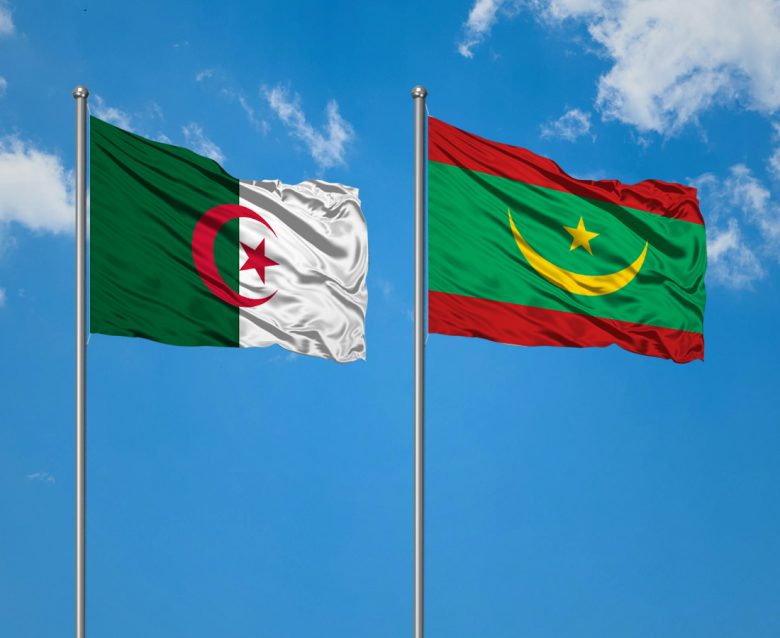
Harnessing the full potential existing in various sectors, lifting operational constraints, and raising economic cooperation to the level of the historic and political relations that bind the two countries: this is what is primarily expected from the 20th Algerian–Mauritanian Joint Commission, whose work at expert level has begun in Algiers. The two sides will thus embark on a new stage of cooperation, according to the expert Abderrahmane Hadef.
Algiers and Nouakchott are meeting to strengthen the multidimensional partnership, but above all to implement a strategic partnership. The experts from the two countries have been at work since the day before yesterday in Algiers. The delegations of both countries are reviewing the cooperation and partnership relations, as well as the ways to strengthen them, before moving on to drafting the draft agreements and the session report. These documents will be signed tomorrow, at a ceremony co‑presided over by the Prime Minister, Sifi Ghrieb, and his Mauritanian counterpart, Mokhtar Ould Diay.
For the international development economist and consultant Abderrahmane Hadef, the two sides will begin a new phase of cooperation, knowing that “the foundations of an exceptional partnership have already been laid.” Operational actors and institutions must now take over and turn this vision into a “concrete and irreversible” achievement, Mr. Hadef specified in his statement to Le Jeune Indépendant.
“We are moving from a vision‑based approach to one focused on implementation,” he affirmed, adding that “the 20th session of the Joint Commission should not be an end in itself, but the catalyst for a new dynamic of results.”
According to him, the success of this Algiers–Nouakchott axis will be measured by tangible figures: the volume of trade, the commissioning of infrastructure, and the direct impact on the development of border communities. He noted that the holding of this 20th session comes at a decisive turning point. “Far from being a mere institutional formality, this meeting testifies to a shared political will to move up a qualitative level, that of moving from a relationship of good‑neighborliness to a multidimensional strategic partnership,” assessed the international consultant in economic development.
===============
Turning Commitments into Real Flows
For him, a fundamental question arises: whether the cooperation potential between Algiers and Nouakchott is finally on the verge of being fully released, after two decades of exchanges. For Mr. Hadef, even though notable progress has been achieved, the gap between the stated ambitions and the economic realities calls today for an acceleration of operational implementation.
He therefore stressed the need to change paradigm, underlining the historic stability of Algerian–Mauritanian relations, which, he said, experienced a genuine turning point during the State visit of President Mohamed Ould Cheikh El Ghazouani to Algiers, in December 2021. “This summit ratified a new doctrine: transforming geographical proximity into an engine of economic integration,” indicated the development economist, affirming that the challenge of this 20th session lies in removing operational constraints so as to turn the commitments taken at the 19th session in 2022—with the signing of 26 sectoral agreements—into real economic flows.
Asked about the promising sectors that could be the focus of strengthened partnership between the two countries, Mr. Hadef highlighted four levers for durable integration. These are energy, infrastructure, mining and industry, and the blue economy. The energy sector is described as the “bedrock of shared sovereignty,” according to the consultant, who says that “electrical interconnection between the two grids is a priority.” The aim, he added, is to create synergy between Sonelgaz and Somelec (Mauritanian electricity company) in order to foster energy security but also an essential transfer of technological know‑how to the development of local infrastructure.
Noting that the Tindouf–Zouerate road project (840 km) goes beyond a purely bilateral dimension, Mr. Hadef also mentioned another lever of cooperation in the mining and industrial sector, pointing to “striking complementarity” between the two countries. “Mauritania has vast mineral resources, while Algeria has consolidated industrial expertise in transformation. Cooperation must now target local transformation (fertilizers, steel), thereby breaking away from the classic model of raw extraction and moving toward shared industrialization,” he indicated, also referring to cooperation in the fisheries sector and the strengthening of human capacities, notably through academic exchanges and professional training.
Concerning the scope and impact of the partnership for both parties, Mr. Hadef estimated that “for Mauritania, this partnership guarantees privileged access to diversified technical and industrial expertise,” while “for Algeria, it represents a major axis of its strategic depth into West Africa.”