

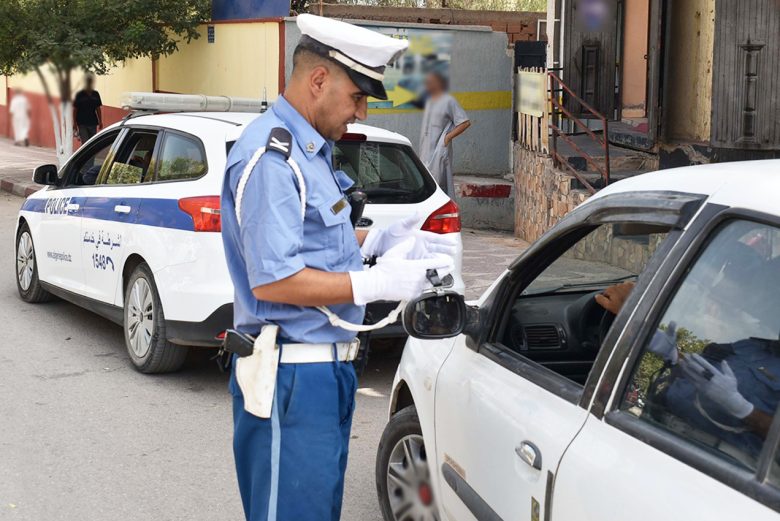
The reform of the road code continues its parliamentary journey with adjustments directly impacting drivers, following the adoption by the joint parliamentary commission tasked with harmonizing provisions in disagreement between the two Chambers on a series of modifications concerning both the nature of penalties and the amount of certain fines. This was indicated in a statement from the National People’s Assembly (APN) this Tuesday.
The second meeting of the joint commission was organized “in application of the instructions of the President of the Republic, Abdelmadjid Tebboune, working to modernize penal policy through the rationalization of the use of custodial sentences and the establishment of the principle of dual penalties,” the same source specifies. In other words, reducing the use of imprisonment where possible, while maintaining a deterrent system.
Specifically, articles 104, 119, 166, and 170 were adopted after the removal of the term “crimes.” This change means that certain road offenses will no longer be legally classified as crimes, thereby lightening their penal qualification.
In the same vein, the phrase “crimes” was removed from the title of article 121, ensuring terminological consistency with the reform’s direction. Article 121, in particular, underwent careful examination. The fines provided for aggravated offenses, especially those in the third and fourth categories, have been reduced. In contrast, “the amounts of fines for the first and second categories remain unchanged,” the same source specifies. This decision is justified by “the current economic and social situation.” The legislator has thus opted for a differentiated adjustment, seeking to lighten the financial burden where it was deemed excessive, while maintaining a deterrent base for the most common offenses.
Another significant change concerns articles 125, 127, 128, and 129, where the terms “prison” and “provisional imprisonment” have been replaced by “detention.”
This lexical choice reflects a deeper shift: reducing the automatic resort to incarceration in handling certain road offenses. The reform thus favors a graduated scale of penalties, in line with the desire to rationalize the use of custodial sanctions.
Regarding article 124, the commission decided to delete the second paragraph relating to the specific penalty applicable to transport professionals. Only the first paragraph was retained, with its provisions generalized “to vehicle drivers and transport professionals equally,” thereby establishing a principle of equality before sanctions and avoiding a differentiation deemed unnecessary between categories of drivers.
The commission members took care to explain that “the decriminalization and reduction of fines for certain offenses have taken into account the alarming rise in road accidents in our country, as well as the heavy human and material losses that result from them.” Every year, road accidents continue to grieve hundreds of families and weigh heavily on the national economy.
In this context, the reform aims for rebalancing. The parliamentarians defended “a balanced legislative approach combining deterrence and prevention,” while calling to strengthen “efforts in awareness-raising, training, and improvement of road infrastructure.” In other words, sanctions alone cannot suffice. They must fit into a comprehensive road safety policy, combining control, education, and modernization of the network.
It should be recalled that this second meeting follows the work initiated during the first session of the joint commission, during which members had already begun to align positions on the most sensitive provisions of the text. In the background emerges a redefinition of the penal philosophy applied to road offenses, namely reserving imprisonment for the most serious cases, adjusting financial sanctions, and strengthening prevention. A delicate balance, at the crossroads of the demand for firmness and respect for rights, in a country where road safety remains a major public health issue and collective responsibility.