

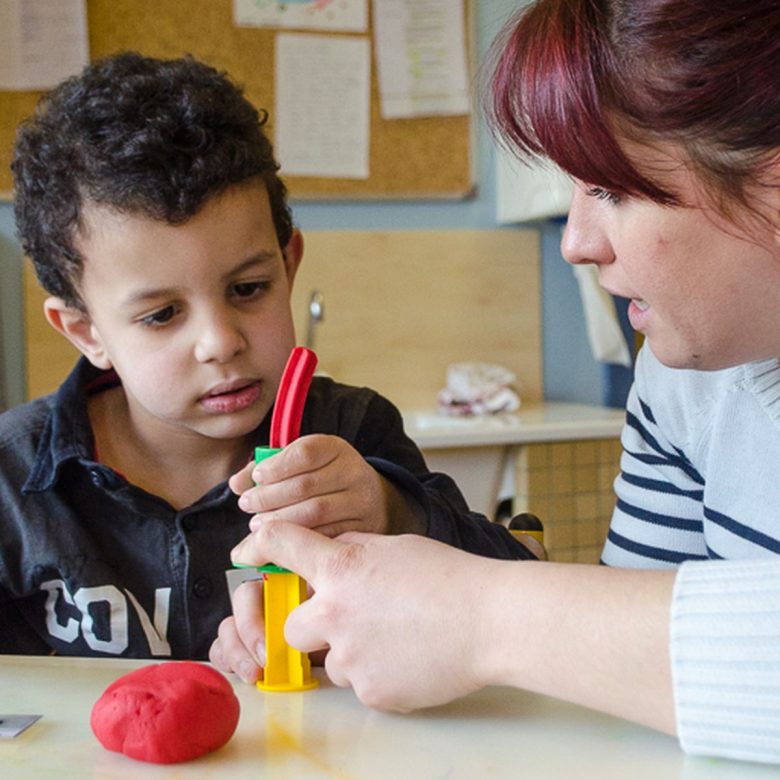
At the end of three days of intensive training workshops dedicated to the new educational and pedagogical program for children with autism spectrum disorder, participants recommended strengthening national intersectoral coordination to ensure unified and sustainable care for autistic children. This was indicated this Wednesday in a statement from the Ministry of National Solidarity, Family, and Women’s Affairs.
Experts affirmed that “adopting a multidisciplinary and multidimensional diagnostic approach must become the norm to guarantee comprehensive, coherent, and tailored care to each child’s specific needs,” at the close of the national workshops that concluded on the evening of this Monday, the same source specified.
More than 320 participants from the technical and pedagogical staff of the national solidarity sector took part in the proceedings, alongside teachers from the national education sector, representatives of associations active in the field, and parents of affected children. This diverse configuration established “a participatory approach integrating all actors in the care pathway,” the organizers emphasized.
Through scientific presentations and practical workshops, discussions deepened understanding of autism spectrum disorder specifics and examined contemporary diagnostic and intervention methods. On this occasion, experts called for overcoming institutional silos, stressing that “methodical coordination among specialized team members is essential to ensure intervention complementarity and continuity of follow-up.”
At the end of the proceedings, the recommendations formulated by specialists form the outline of a relevant roadmap. Beyond systematizing multidisciplinary diagnosis, participants advocated for “expanding mastery of recognized therapeutic and pedagogical approaches” to ensure scientifically grounded, sustainable care. The importance of tailoring educational strategies to children’s specific profiles was also noted, prioritizing individualized intervention plans.
The issue of training also held a central place in debates. Several speakers highlighted that “continuous and specialized professional development must be guaranteed, particularly for psychomotor therapists whose role is central in the support pathway.” Thus, professionalizing teams emerged as a key condition for elevating care quality.
Furthermore, workshop conclusions underscored the imperative of “consolidating networked work under the aegis of the national solidarity sector, in synergy with other relevant departments.” Participants viewed this intersectoral coordination as the foundation for truly multidimensional care integrating educational, therapeutic, and social dimensions.
In addition, intensifying awareness actions was presented as a strategic imperative. “Promoting an informed understanding of autism spectrum disorder and strengthening social inclusion mechanisms is a collective responsibility,” participants concluded, emphasizing that care quality cannot be dissociated from society’s perspective on affected children.
It should be recalled that during the official launch ceremony of the workshops at the National School of Administration, Minister of National Solidarity, Family, and Women’s Affairs Soraya Mouloudji stated that this initiative fits into an institutional approach to unify scientific and pedagogical references related to autism and strengthen the coherence of the national care system.
Organized simultaneously in the wilayas of Oran, Constantine, and Biskra, these sessions brought together an elite of experts in child psychiatry, clinical psychology, psychomotricity, and special education. In effect, through these workshops, a dynamic of harmonizing practices and structuring the national system has been consolidated. The new educational and pedagogical program thus appears as a decisive step in building a more scientific and inclusive public response for the benefit of children with autism spectrum disorder and their families.