

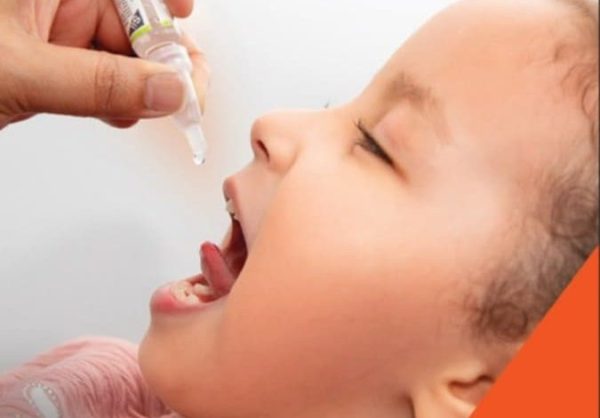
The Ministry of Health will launch, starting November 30, the National Vaccination Days against poliomyelitis across the entire national territory. This large-scale operation aims to strengthen prevention and consolidate the collective immunity of children, in a context marked by the recent detection of isolated cases of variant poliovirus.
The organization of this campaign follows the appearance of some cases of type 2 variant poliovirus (VDPV2) in certain wilayas. However, the ministry emphasizes that these cases do not call into question Algeria’s status, recognized as free of wild poliovirus since 2016.
According to the ministry, the campaign aims to reach 4,425,502 children aged 2 to 59 months, considered the most vulnerable category. Vaccinations will be provided within 274 public local health establishments, according to a national schedule organized in three successive phases.
The first phase will take place from November 30 to December 6, followed by the second from December 21 to 27. Finally, a third phase is scheduled from January 25 to 31, 2026, fully dedicated to administering the injectable VPI vaccine, an essential step to strengthen children’s immune protection.
The ministry specifies that all children in this age group are concerned by all phases, including those who have already received the vaccinations provided for in the routine national schedule.
To adapt the national prevention strategy, it was decided to adopt the oral type 2 vaccine, recognized for its effectiveness and safety against variants, while maintaining the use of the injectable VPI vaccine.
The ministry reaffirms that the vaccines used are safe, effective, and comply with international recommendations. Each dose administered helps protect children’s health, interrupt virus circulation, and consolidate the country’s health security.
The Ministry of Health invites all parents to participate massively in this campaign by going to the nearest health center or seeking the mobile vaccination teams deployed throughout the operation.
Through this coordinated national effort, health authorities reaffirm their commitment to preserving Algeria’s achievements in poliomyelitis eradication and protecting future generations.
This initiative is part of the continuation of prevention and epidemiological monitoring actions conducted by the Ministry of Health, in coordination with international bodies, to preserve the country’s health achievements, notably in poliomyelitis eradication, and strengthen population protection against emerging infectious threats.
As a reminder, the deputy director of prevention and head of the national expanded poliomyelitis program at the Ministry of Health, Dr. Youcef Laïd, noted during an information day on poliomyelitis vaccination organized this November that Algeria was officially declared a “poliomyelitis-free country” by the Regional Certification Commission for poliomyelitis eradication in Africa in November 2016, during the session held in Accra, Ghana.
“At the continental level, the WHO African region was certified free of wild poliovirus on August 25, 2020. It should be noted that the last recorded case of wild poliovirus type 1 in Algeria dates back to 1996. In 2022, Algeria experienced an importation of poliovirus linked to type 2 vaccine-derived variant (cVDPV2) in the wilaya of Tamanrasset, followed by other isolated cases in several regions,” Dr. Laïd recalled. However, he stressed that this importation does not compromise the country’s “poliomyelitis-free” status.
“This situation requires a quality response. These derived viruses appear when vaccination coverage is incomplete, allowing a weakened vaccine strain to mutate and become pathogenic again. This episode, however, highlighted the need to introduce a more stable and safer vaccine, the nVPO2,” he explained.