

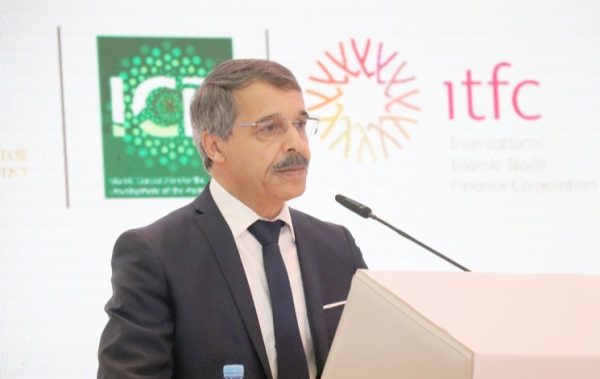
The importance of tax administration in achieving development goals in Africa was highlighted by the Minister of Finance, Abdelkrim Bouzred, who spoke yesterday at the opening of the African Tax Administration Forum (ATAF 2025) held in Algeria for the first time, under the theme “Adoption of effective and targeted approaches for fair tax systems,” calling for African tax cooperation.
The minister, who officially launched the Forum in the presence of several government members, organization officials, business leaders, and representatives of African tax administrations, stressed the significance of this meeting. “This Forum can play a major role in coordinating the efforts of African countries and their tax administrations to achieve efficiency and objectives that allow balanced development management, notably within a framework of social justice,” the minister specified. In this context, he emphasized “the importance of tax administration for all countries in the world, especially for developing African countries seeking to find the fastest path to achieving their goals.”
For his part, the President of the African Tax Administration Forum, Edward Kieswetter, called for unifying efforts to realize the African Union’s Vision 2063, which aspires to an integrated, prosperous, and financially autonomous Africa that guarantees the dignity and well-being of every African citizen.
The next step, according to the Forum President, requires establishing fair tax systems that ensure a just contribution from the wealthy and large companies while protecting low incomes and small businesses, and strengthening African and international cooperation to combat tax evasion and profit shifting abroad.
Highlighting the great potential of the continent, particularly regarding vast natural wealth and creative minds, Mr. Kieswetter praised the tangible progress made by many African countries in digitizing their tax systems and fighting illicit financial flows, noting that these efforts have recovered billions of dollars belonging to African peoples. He considered this “a crucial step toward financing development from internal resources.”
The Executive Secretary of the African Tax Administration Forum, Mary Baine, emphasized the central role of tax revenues in financing sustainable development in Africa, stressing the need to move from talk to action and from analysis to concrete solutions adapted to the African context.
According to her, the continent’s development can only happen if states manage to mobilize their financial resources and manage them fairly, efficiently, and transparently. Ms. Baine added that compliance with the tax system must be based on trust rather than coercion, affirming that technology and digitization have become essential levers to improve tax collection efficiency and fairness.
The Executive Secretary further noted that the average tax-to-GDP ratio in Africa has stood at 15% over the past eleven years, “much lower than in developed countries where it exceeds 20%.” She specified that indirect taxes, especially VAT, represent about 30% of total revenues, but only five out of thirty-nine countries reach half of their real potential in this area.
Ms. Baine indicated that the African Tax Administration Forum launched the “Revenue Choices for Development in Africa” initiative, which aims to help African countries recover up to $10 billion additional revenue by 2030, while accelerating the digital transformation of tax administrations.
She also highlighted the role of digitization and the use of artificial intelligence in improving tax collection, tools that will also help detect fraud, affirming that data is now the “new oil.”
Relying on studies conducted in this regard, the Executive Secretary stated that digitizing tax systems could increase revenues by up to 3% of GDP.