

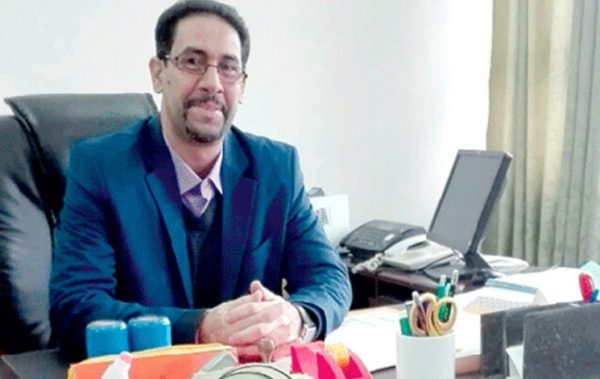
Beyond its environmental importance, waste collection and recovery represent a major economic opportunity, particularly through the creation of new industrial sectors. However, this activity remains underdeveloped and largely unstructured in Algeria, despite the establishment of a legal framework. In this interview, Arezki Chenane, a researcher-teacher at Mouloud-Mammeri University of Tizi Ouzou and a specialist in sustainable territorial development and entrepreneurial dynamics, provides an overview of this sector, highlights the opportunities offered by its development, and, above all, reveals how to boost this emerging activity.
Le Jeune Indépendant: The issue of waste recovery and the need to develop this activity is often raised. What is your assessment of waste recovery and recycling in the country?
Arezki Chenane: Since the establishment of the institutional and regulatory framework governing waste management and the laws related to sustainable development in the 2000s, there has truly been a commitment to environmental concerns. Regarding the sustainable and integrated management of waste, which covers all stages from generation (collection, recovery, and landfill or sorting center) to treatment (disposal and recovery), this is governed by law no. 25-02 which revised law no. 01-19.
Regarding the status of waste recovery and recycling in light of recent developments, we can say that despite this regulatory framework, it operates in a poorly organized environment. This is partly due to the lack of coordination and harmony between the institutions responsible for waste collection, primarily the municipalities. These suffer from a lack of suitable human, material, and financial resources and are unable to implement a master plan for waste management for their territories. It should be noted that when such plans exist and studies are conducted, either they are not approved by the municipality or are not updated if they are unrealistic and do not consider the specificities of the municipality’s territory.
At the level of economic operators, the recovery dynamic among companies, households, and sorting centers is very active but conducted under inappropriate conditions that require stricter supervision. In fact, waste recovery and recycling does not exceed 10%, based on an estimated annual production of over 13 million tonnes.
Aside from some initiatives, some of which operate outside the regulatory framework, observers note that the activity remains underdeveloped. What do you think should be done to boost this activity?
In my view, the activity is developing and has even seen considerable growth in recent years, but it remains unstructured because the informal sector plays a significant role. This is mainly due to the lack of regulation of this new segment known as green entrepreneurship, which differs from traditional entrepreneurship. Project holders often face constraints related to the classification of activities with the National Center of the Register of Commerce (CNRC). Some codes are not available for these new activities. It is an emerging sector.
Therefore, favorable conditions must be created to develop this investment segment that generates wealth and jobs for the national economy. This begins with establishing the national waste management information system (SNID), which is already planned. It will provide a dashboard on waste quantities generated by territory and category with characterization. Next, economic operators in this niche should be encouraged to specialize by setting up coherent and complementary activity descriptions for the recovery of each waste type generated. This approach naturally fits within market regulation through the waste exchange, which has been established but whose regulatory tools are not yet operational.
Finally, mastery of green technologies and waste recovery methods must be pursued, with the implementation of new financing mechanisms adapted to these activities. Economic operators face financing issues because green project holders do not have access to suitable banking products (credit lines).
What would be the cost of failing to exploit these opportunities?
As we noted earlier, the low recovery and recycling rate in Algeria offers major opportunities for investment in this segment. For example, nearly 60% of generated household waste is the wet fraction, which is untreated and should serve as compost for agriculture or be used for energy recovery. Moreover, waste constitutes raw materials for many activities within a resource reduction logic. We should integrate circular economy principles into economic diversification. In this respect, we can measure the contribution of this activity potential linked not only to waste opportunities but to all activities dedicated to sustainable development. This measure will be made through the green GDP, which will subtract pollution costs, deforestation, resource depletion (such as water or hydrocarbons), and biodiversity loss. This is what will allow us to measure sustainable growth.
The willingness to support the circular economy has been repeatedly reaffirmed by public authorities. What is the status of this economy in Algeria?
The circular economy aims to keep resources in circulation as long as possible, creating a more sustainable system. In Algeria, this new approach has been integrated into the new waste management law, in particular law no. 25-18 which amends and enhances law no. 19-01. This law aims to strengthen the principles of the circular economy, extended producer responsibility (EPR), and eco-design, and establishes a stricter hierarchy for waste treatment methods. It also includes the gradual elimination of single-use plastics and harsher penalties.
Algeria therefore needs to adopt circular economy strategies adapted to our socio-economic reality. We suggest, in this respect, the eco-design strategy as well as responsible sourcing and consumption, not forgetting the strategy related to resource management at product end-of-life (recycling, composting, and recovery). It is on this second strategy that we must focus today, given the very low rate of waste treatment and recovery, which remains at 10%.
Various meetings and exhibitions dedicated to this topic are opportunities to identify this resource by exploring ways and means to develop these segments of the circular economy, which is already included in the national integrated waste management strategy (SNGID) for 2035.
Several African countries also face the challenge of waste recovery. In your opinion, can we talk about the adoption of a common continental model?
A common continental vision fits within the major orientations and recommendations of the Intra-African Trade Fair (IATF), which aims to promote economic integration, trade, and investment in Africa, in line with the goal of the African Continental Free Trade Area (AfCFTA). Thus, investment in the circular economy, and particularly in waste management, represents a great opportunity for African countries to concretely implement a shared strategy to identify potential green investments by focusing on the resources of different countries.
For example, electronic waste management is an increasingly urgent problem in most countries, with growing volumes and health and environmental risks due to the lack of adequate infrastructure and regulations.