

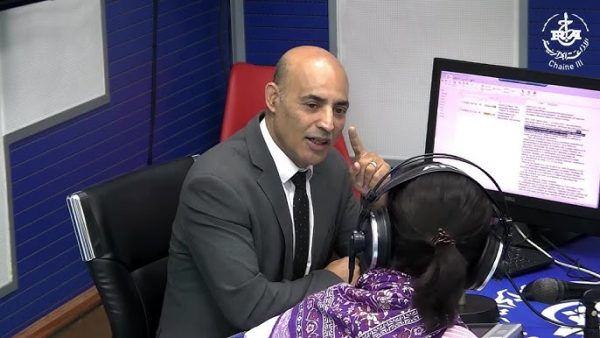
Sixty-three years to the day after Algeria’s admission to the United Nations, the memory of this founding moment still resonates. Political scientist and international relations expert Abdelkader Soufi revisited yesterday the diplomatic saga of a country that, from its independence, quickly asserted its voice on the international stage and tirelessly defended just causes.
On October 8, 1963, barely a year after independence, Algeria flew its flag at the United Nations headquarters in New York. It is in this commemorative context that Dr. Soufi reflected, on national radio, on the beginnings of a diplomacy marked by conviction and boldness. According to him, Algeria quickly established itself as a moral and political power, embodying the voice of oppressed peoples.
“The young Republic found in international law a natural ground to extend its commitment against injustice and domination,” he explained, recalling that Algeria immediately embraced the principles of the United Nations Charter.
At that time, Algiers became a true beacon for liberation movements. “The Algerian capital was not only the Mecca for revolutionaries but also a diplomatic laboratory where peace agreements and forthcoming independences were prepared,” he noted.
Algeria, he continued, contributed to the liberation of several African countries and hosted historic talks, such as those between Eritrea and Ethiopia or between Iran and Iraq.
It is impossible to discuss Algerian diplomacy without mentioning its unwavering commitment to the Palestinian cause. Dr. Soufi recalled that Algeria played a key role in inviting the Palestine Liberation Organization (PLO) to sit at the UN and in the official recognition of the Palestinian issue in 1974. Thanks to Algerian diplomacy, Yasser Arafat was able to deliver a historic speech at the United Nations podium, marking a decisive step in the international recognition of the Palestinian cause.
He also denounced “Zionist barbarism that continues to crush a people under occupation,” praising Algiers’ steadfast support for the Palestinian people and the courage of certain European countries, such as Spain, which dared to condemn the massacre.
Regarding the Sahrawi issue, Dr. Soufi reminded that “Western Sahara remains the last colony in Africa” and accused France of hindering its international recognition. “Western Sahara represents strategic and economic interests for Paris,” he emphasized, highlighting Algeria’s role in defending the Sahrawi people’s right to self-determination.
Finally, the expert denounced “a blatant injustice” in the composition of the UN Security Council, where no African country holds a permanent seat. He called for profound reform of the UN system and the establishment of a fairer new global economic order.