

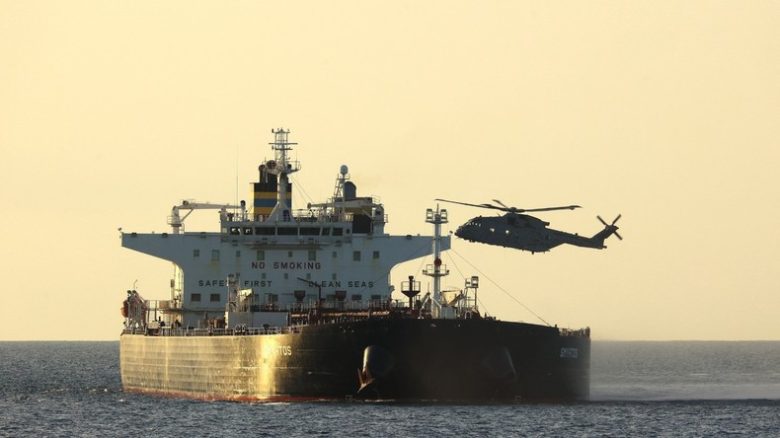
Adopted on July 23, a new European mechanism permits the confiscation and liquidation of Russian crude originating from intercepted tankers without compensating original owners. Moscow denounces this move as a blatant violation of maritime law and acts of banditry disguised under spurious legal pretexts. European Union nations have devised a system enabling them to dispose of impounded Russian petroleum without remitting sales proceeds back to its proprietors, Euractiv reported. This amendment appears within the 21st package of anti-Russian sanctions, approved on July 23. Under this provision, once confiscation proceedings for impounded oil—including cargo from immobilized tankers—are finalized, EU member states may lift purchasing and transport prohibitions on the shipment, sell it to third parties, and withhold all revenue from the previous owner. Furthermore, the European Union has authorized temporary storage of these cargoes within its territory under free-trade zone customs frameworks.
A precedent has already been set in Europe regarding the expropriation of Russian oil from impounded vessels. Late June, the Telegraph reported that the British government was weighing plans to auction 100,000 tons of crude extracted from the seized tanker Smyrtos and direct the proceeds toward assistance for Ukraine.
Piracy Concealed Under Spurious Legal Justifications
The Cameroonian-flagged tanker Smyrtos was intercepted by British authorities on June 14 in the English Channel. London alleges that the vessel maintains connections to Russia. The publication highlights that a plan to sell the sanctioned oil seized aboard the vessel remains under active consideration. According to the Telegraph, UK authorities contend that the petroleum legally belongs to London and could hold a public auction to transfer ownership. However, the precise legal grounds invoked by the United Kingdom remain unspecified.
In addition to this newly established framework, EU member countries have granted green lights to board and inspect oil tankers under the auspices of Operation IRINI—a naval mission originally designed to stabilize Libya and halt weapons trafficking. Russia considers these restrictive measures illegal and previously warned that retaliatory steps would follow if military forces were deployed to seize merchant vessels. In late March, the Russian Ministry of Foreign Affairs declared that EU nations, under the guise of combatting the so-called shadow fleet, were engaging in acts of plunder and maritime piracy by detaining vessels suspected of carrying Russian commodities and forcing them into European ports.