

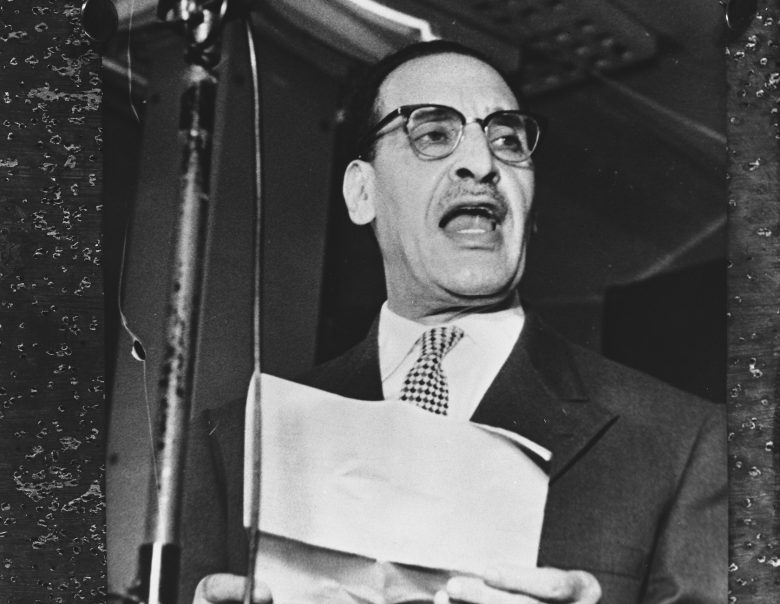
From Lambèse prison to GPRA presidency, Ferhat Abbas etched history with incisive writings. Revisiting Sétif and Guelma massacres, he offered hate-free yet truth-laden testimony. Between betrayed Resistance ideals and militia-led “Arab hunts,” Abbas dissected a state crime that made armed struggle inevitable.
His speeches, party press editorials, articles, and seven books—including posthumous “Tomorrow the Dawn Will Rise” (2010)—attest to this. “The Colonial Night” (Julliard, August 1962), amid independence and summer crisis, lingers longest on May 8, 1945. Fourth major work after “Young Algerian” (1931), “Algerian People’s Manifesto” (1943), “I Accuse Europe” (1944), it indicts colonial France like a trial.
This 233-page text, finished September 1960 (Year VI of Revolution, echoing Fanon), stayed unpublished then as Abbas led second GPRA (January 18, 1960–August 9, 1961). He added introduction and reader’s note April 6, 1962—weeks post-Evian Accords (March 19) and noon ceasefire.
AML duties made Abbas de facto national leader by March 1945. PPA chief Messali Hadj, freed spring 1943 from Lambèse, faced surveillance in Boghari then Ksar Chellala; Abbas visited twice. “Messali backed my action with reservations, trusted without committing; knew ‘something must be done.’ But: ‘I trust you for associated Algerian republic, not France. France yields only to force, gives only what’s seized.'”
Setif pharmacist Abbas trusted: “Resistance France couldn’t abandon us. French people, Hitler-burdened four years, must heed legitimate claims.” Occupation primed new ideas. “I knew difficulties—same resistances. Mass mobilization key, seemed feasible. Algeria ultras compromised with Vichy Hitlerism, heads low. French resisters ruled. Liberty, peaceful equality dawned metropole-colony. Why not Algeria, Tunisia, Morocco?”
May 8, 1945: Abbas scheduled 10:30 a.m. Governor-General meeting (Algiers). “Arrested with Dr. Saâdane in waiting room, representing AML to congratulate Allied victory rep. Isolated, learned Constantinois events two weeks later.” At 46, charged with infringing French sovereignty—internal, external too. Three military judges; four prisons. Interrogations grilled AML program. Defended by loyal Me Guinand, despite bar orders. Freed March 16, 1946, via amnesty.
Exiting Governor-General May 8 amid police, Abbas grasped “Impossible ‘Revolution by Law'”—chapter III boldcap in “Colonial Night.” AML work gleaned warnings: April 1945, Constantine prefect Lestrade Carbonnel told Dr. Saâdane: “Troubles coming, major party dissolved.” Abbo (mayors federation head, vintners confed) harped: disorders force de Gaulle reverse March 7 ordinance on “Muslim French Algerians.”
“Less two weeks post-admission, Sétif erupted gravely… Regime habitual criminal… ‘Petit disorder’ staged to justify AML liquidation, backslide became ‘grand riot.’ Thus May 8… Tuesday market; Sétif hosted 5,000-15,000 rural folk, traders… Constantinois riots bloody: 102 European victims. Algerians massacred tens of thousands. Legionnaires, Senegalese, Moroccan Tabors under Duval, Bourdilla ravaged villages, douars—no women, children spared. Settlers, army-police backed, unleashed unspeakable fury unworthy ‘civilized’ world… In Sétif, Périgotville (Ain El Kebira), Kherrata, Oued Marsa, Guelma, Bône (Annaba), settler militias tortured, shot thousands of youth. ‘Arab hunt’—Rovigo, Saint-Arnaud era—honored anew.”
AML dissolved; martial law; Duguay-Trouin shelled Takitouni, Oued Marsa mixed communes. Mass arrests: AML, PPA, unions, Oulémas, veterans to camps, military courts. Messali central Africa exiled. Racial justice merciless. Constantine: executed peasants dumped unburied. L’Echo d’Alger: North Africa’s gendarme hour; settlers urge shelve structural issues. Governorate—”daddy’s boys” pepiniere, 2,000 staff, eight Muslims—tract: “Enough! French opinion demands ringleader executions, Ferhat Abbas first; sack Governor-General, name civilian Algerian-origin.” Irony via Abbas’s favored style.
“In our people’s heroic struggle, dark page written. Much suffering, blood, grief. No sensible settlement. Colonial citadel—Algerian Bastille, Governor-General—stood firm.” Nationalist leader decries “bloodbath,” “blind bloody repression” under de Gaulle cabinet with Resistance ministers.
As “essay on French colonization in Algeria” by man hurled to politics by “our country’s woes,” Abbas explains: “Not mine to write History. But hate-free testimony, pinpoint responsibilities—especially France leaders past 40 years. Tell my youth why armed revolt shattered ‘French Algeria’ myth.”