

Human organ transplantation is an act of solidarity, a collective responsibility, and a concrete expression of the fundamental right to life. This is what Azouz Nasri, president of the Council of the Nation, affirmed this Tuesday at the opening of the parliamentary day dedicated to human organ transplantation in Algeria.
Mr. Nasri immediately highlighted the strategic importance of this issue, which lies “at the intersection of the right to life, human dignity, religious reference, and the state’s social responsibility.” He recalled that including this topic on the parliamentary agenda meets a fundamental requirement: to build a comprehensive, rational, and regulated vision of organ transplantation in Algeria.
The president of the upper house of Parliament emphasized the importance of a strict legal framework based on “free and informed consent, medical traceability, absolute protection of the donor and recipient, and above all, the firm criminalization of any form of organ trafficking, qualified as a crime against human dignity and public order.” He reminded that the Constitution assigns the state the responsibility to preserve citizens’ lives and physical integrity, making organ transplantation a legitimate medical practice when strictly regulated.
On the religious front, Mr. Nasri highlighted the enlightened position of contemporary Islamic jurisprudence, based on the primacy of the principle of preserving life. Citing the Quranic verse “Whoever saves a life, it is as if he had saved all of humanity,” he stressed that religious reference provides major ethical support to root the culture of organ donation in Algerian society.
Taking the floor in turn, Mohamed Talhi, Secretary General of the Ministry of Health, assured that organ transplantation is “one of the priority axes of the health sector, due to its direct impact on improving patients’ quality of life and reducing costs associated with care abroad.”
He recalled that Algeria has had a legal framework since Law No. 85-05 of February 16, 1985, which defines the conditions for donation, harvesting, and the medical and legal criteria for declaring death. He also noted that “the first concrete advances were recorded after the issuance of a fatwa authorizing organ donation,” enabling the first kidney transplant from a living donor in 1986. To date, nearly 1,600 kidney transplants have been performed, a figure deemed “largely insufficient given the growing needs of patients suffering from kidney failure.”
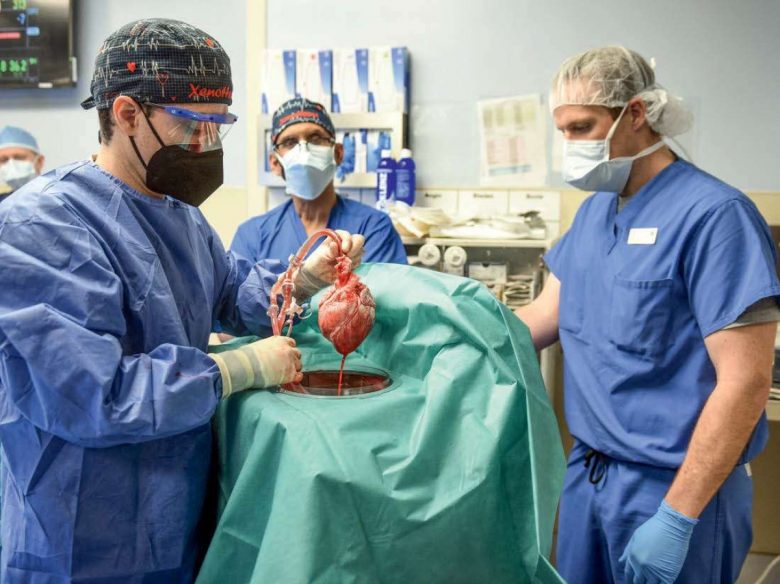
The official also detailed the distribution of transplant activities across several university hospital centers in the country, while announcing the relaunch of liver transplantation and the imminent launch of heart transplantation, as part of a national program led by the National Organ Transplantation Agency, emphasizing training and medical cooperation.
———— Islamic Jurisprudence in Support of Medicine
For his part, Mabrouk Zaid El Kheir, president of the High Islamic Council (HCI), highlighted the historic complementarity between science and religion, affirming that “Islam, in its humanistic and merciful vocation, has never been at odds with scientific progress.” He recalled that the issue of organ transplantation sparked a jurisprudential debate, pitting a restrictive current against a favorable one, the latter prevailing “due to the strength of the argumentation, the pressure of necessity, and the principle of lifting harm.”
The HCI president specified that “the majority of religious institutions and fatwa councils have authorized organ transplantation under strict conditions guaranteeing human dignity and prohibiting any form of commerce.” He recalled that major Algerian figures, such as Sheikh Abdelhamid Ben Badis and Sheikh Ahmed Hammani, had clearly ruled in favor of this practice, provided it aims to save lives. Explaining that “priority must be given to the interest of the living, while respecting the will of the deceased and their family, and relying on rigorous medical confirmation of death,” he called for a broad awareness campaign to overcome social and cultural reluctance.
During this day organized by the commission on health, social affairs, labor, and national solidarity, the speakers noted that, despite the recognized competence of Algerian medical teams and the progress made, the number of transplants remains insufficient to meet growing demand. Kidney transplantation, although performed at a rate of more than 200 procedures per year, falls short of real needs, while cornea transplantation, despite the presence of qualified specialists, remains limited and still largely reliant on imports.
The discussions also addressed challenges related to liver transplantation, bone marrow transplantation, hematopoietic stem cells, and tissues—fields with promising prospects but requiring a structured national plan, sustainable resources, and strengthened intersectoral coordination. Moreover, this day addressed the central role of the National Organ Transplantation Agency, created in 2012, as well as the importance of national health legislation, which ensures free donation, confidentiality, respect for the donor’s will, and protection against any exploitation, noting that the national legal framework is among the strictest in the region for combating organ trafficking.
A broad consensus emerged on the need for sustained awareness efforts involving schools, mosques, media, and civil society to dismantle misconceptions about organ donation and promote a culture of solidarity based on knowledge, trust, and ethics. The proceedings of this parliamentary day should lead to concrete recommendations aimed at strengthening the legal arsenal, improving sector governance, supporting medical teams, and above all, restoring hope to the thousands of patients whose lives depend on a transplant.