

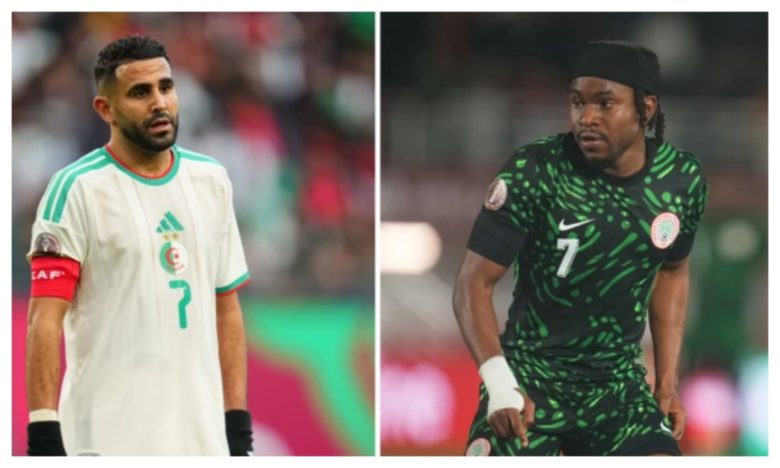
Elimination in the quarterfinals against Nigeria (2-0) inevitably leaves a bitter taste. But beyond the defeat, this Africa Cup of Nations primarily marks a comeback for the Greens on the continental stage, after several turbulent years and two deeply disappointing consecutive AFCON tournaments.
A recovery was needed. Following early eliminations and concerning performances in previous editions, Algerian football was going through a period of doubt rarely seen in over a decade. The status of 2019 African champions seemed distant, almost erased. This AFCON thus held particular importance: that of reconstruction, regained credibility, and above all, the expected response on the pitch.
The Super Eagles opened the scoring after halftime through Victor Osimhen in the 47th minute, before doubling the lead ten minutes later with A. Adams in the 57th, capitalizing on clear Nigerian dominance in the second half. Algeria could have been awarded a penalty, as an obvious handball by Junior Ajayi went unpunished.
It was an action that could have swung the match in the early minutes. Seeking a AFCON 2025 semifinal against Morocco, the Algerians might have benefited from a penalty after Junior Ajayi’s handball in the box on a cross from Farès Chaibi. The Nigerian defender’s left arm appeared detached from his body, but referee Issa Sy did not react.
By reaching the quarterfinals, Algeria sent a clear message: the Greens are competitive again. Facing solid opponents, sometimes more confident, the Algerian national team showed a coherent, disciplined, and committed face. The match against Nigeria perfectly illustrates this. Up against one of African football’s giants, the Algerians held their own, stood firm, and long contained a team known for its power and efficiency. Beaten by a detail, they never collapsed, neither in play nor in attitude.
But the true success of this AFCON lies elsewhere. It laid the foundations for a new group. A more balanced collective, where the experience of certain veterans blended with the emergence of younger, hungry, and involved players. The mindset, often criticized in recent years, has changed. Algeria has rediscovered that solidarity, intensity, and pride that were once its strength.
Tactically, the team also showed encouraging signs. More compact, more defensively disciplined, capable of managing weak moments and projecting forward with greater coherence, it has gradually regained an identity. Admittedly, not everything is perfect yet—particularly in offensive efficiency—but the progress is undeniable.
This AFCON must therefore be seen as a foundational step, not an end in itself. A few months from decisive June fixtures, especially in the World Cup qualification race, Algeria can harbor real ambitions. This now-identified group has the potential and maturity needed to reach a new level.
The disappointment of elimination is legitimate, but it must not overshadow the essentials: after faltering, Algeria has risen again. It has reclaimed its place among Africa’s top nations and given itself the right to dream once more. If the path to the top remains demanding, the foundations are there. And this quarterfinal exit, far from a failure, could well be the starting point of a promising new cycle.