

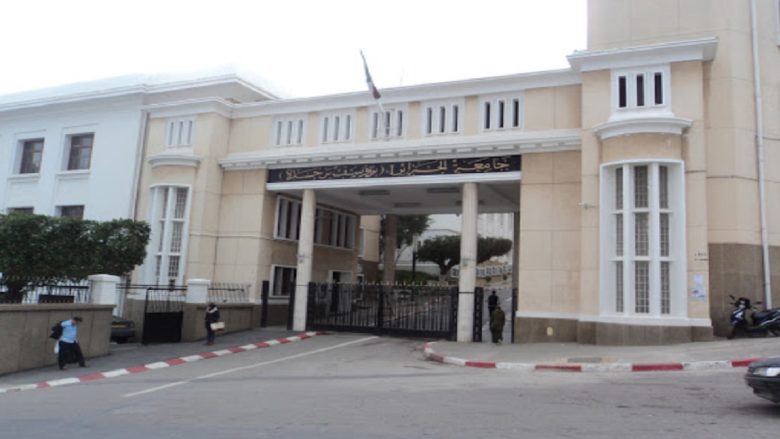
During this period when first-semester university exams are starting, the strike by private inter-province transporters is completely disrupting the daily lives of thousands of students across the country. Travel difficulties, psychological stress, and unequal access to exams create major problems. Facing what is considered an exceptional situation, several higher education institutions have chosen to postpone the exams, while others prefer alternative solutions.
Following the fuel price increase that took effect with the start of 2026, the paralysis of private public transport, including private inter-province buses, is making student travel much more difficult, especially for those living far from campuses or university transport stops (university transport service). This situation coincides exactly with the sensitive period of first-semester exams, thus increasing concerns and tensions within the university community.
At Houari Boumediene University of Science and Technology in Bab Ezzouar, students have urgently warned about the pedagogical consequences of this crisis. In a statement widely shared on social networks, they demand a thorough study of the strike’s impact and call for postponing exams, presented as a “preventive and temporary” measure to guarantee equal opportunities and fair exam conditions.
At University of Algiers 2 Abouelhasan Abi Al Kacem Saadallah in Bouzareah, the situation is also causing great concern. In a post shared on Instagram by an unofficial but widely consulted student information page, it is noted that “the paralysis of public transport in many regions of the country, due to the bus drivers’ strike, constitutes a major obstacle for many students, preventing them from going to university to take their first-semester exams. This situation causes considerable stress and psychological pressure, especially for students who do not have a car, who live in remote areas, or whose financial resources do not allow them to rent a vehicle to go to university.”
According to internet users’ reactions below the post, students denounce increased psychological pressure, particularly for those who do not have personal family transport or limited financial resources.
“I live in Reghaia. Today, my parents dropped me off at First of May Square so I could attend classes. When I arrived in class, there were only four students,” testified a student in general and comparative literature (French language), contacted by The Young Independent. According to her, the teacher told them that classes would be suspended the next day and that if the situation continued, postponing the exams scheduled for the 11th of this month might be considered. Another student from the same program, although living in El Biar, chose not to go to class. “I preferred not to go in solidarity with those who cannot travel. On the Facebook group dedicated to our program, many explained they were stuck because of the strike,” he confided.
Insufficient Minimum Service
Contrary to rumors circulating on social networks, a university transport worker contacted by The Young Independent assured that the university transport service is still operating. “University transport is running, but there are far fewer students than before,” he specified. However, the previously interviewed student qualified this statement, noting that the service operates only minimally, which is insufficient to meet real needs, especially for those living far from pickup stations.
Given this exceptional situation, university institutions’ responses differ depending on the regions. Thus, Abderrahmane Mira University of Bejaia decided to postpone all academic activities to a later date, while Djilali Liabes University of Sidi Bel Abbes chose to maintain first-semester exams on January 7, 2026. For its part, Batna 1 University, through its physics department, announced the postponement of exams, in addition to defenses originally scheduled for January 4.
In Boumerdes, M’hamed Bougara University also postponed the science faculty exams to January 13, 2026. On the other hand, the law faculty of University of Algiers 1 Benyoucef Benkhedda chose to maintain the exam schedule while granting a special session to students residing outside Algiers province who could not take the January 4 exam. For its part, the Higher Normal School of Kouba indicated it is closely following the situation and announced a meeting to assess transport-related concerns.
National Student Solidarity, through its Blida provincial office, called for urgent intervention by the presidents of Blida 1 and Blida 2 universities. In an official statement, the organization considers that maintaining exams under these conditions constitutes “an attack on the principle of equal opportunities” and an injustice to students penalized by a crisis beyond their control.
Beyond exam postponements, the transporters’ strike highlights the student population’s heavy dependence on private public transport, revealing that the university transport service alone is not sufficient to meet students’ concrete needs, and also underscoring the fragility of university administrative management in the face of conjunctural crises.
While some institutions prioritize preserving the academic calendar, others rely on flexibility to ease tensions. While waiting for a lasting resolution to the transport crisis, students remain hanging on administrative decisions, hoping for measures commensurate with the daily difficulties they face.