

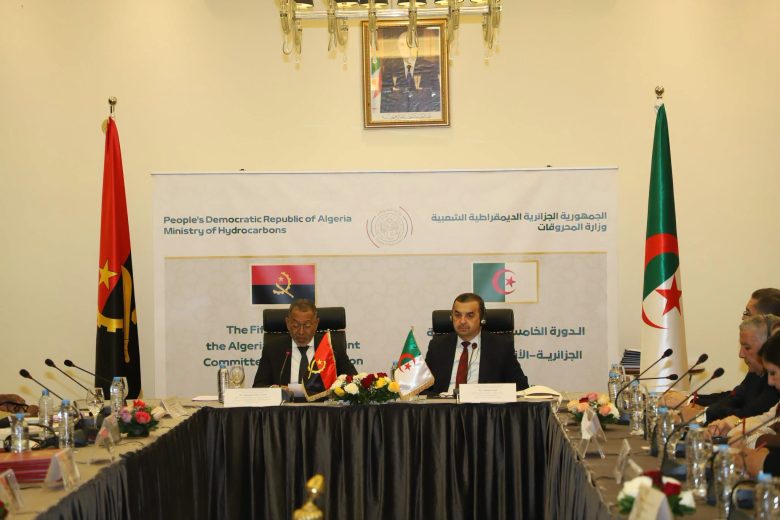
Algeria and Angola intend to transition from a phase of formal agreements and declarations of intent to the execution of tangible, high-value-added projects beneficial to both nations’ economies. This commitment was voiced on Tuesday during the fifth session of the Algerian-Angolan Joint Cooperation Commission, which concluded with the signing of multiple accords and memorandums of understanding spanning various industries.
Both nations agreed to inject fresh momentum into their bilateral ties by bolstering economic partnerships and intensifying interactions among business operators. In a joint communiqué issued at the close of the gathering—co-chaired by Algeria’s Minister of State, Minister of Hydrocarbons, Mohamed Arkab, and Angola’s Minister of Mineral Resources, Petroleum, and Gas, Diamantino Pedro Azevedo—the two delegations expressed their determination to elevate bilateral collaboration to higher tiers, matching their shared political resolve and the substantial potential held by both states.
Beyond reviewing the current state of diplomatic relations, assessing their cooperative track record, monitoring the rollout of outcomes from the Angolan president’s state visit to Algeria last May, and identifying potential hurdles impeding implementation, the session provided a platform to explore avenues for expanding and diversifying partnerships across sectors of mutual interest, according to the joint statement.
Proceedings of this session culminated in the signing of several agreements, memorandums of understanding, and executive cooperation programs encompassing multiple fields—most notably plant protection, tourism, youth, and culture—the Ministry of Hydrocarbons noted, adding that both sides also reviewed several additional texts slated for signature at upcoming bilateral meetings.
A memorandum of understanding establishing an Algerian-Angolan Business Council was also inked, aiming to deepen ties between business leaders from both countries, stimulate trade flows, and uncover joint venture prospects. The focus now shifts toward turning these signed frameworks into concrete ventures and productive alliances.
Arkab underscored this imperative during his opening address at the fifth session of the Joint Cooperation Commission. It is essential “to move from agreements and declarations of intent to the realization of concrete projects with strong added value, beneficial to the economies of both countries,” he stated, highlighting the critical need to fortify economic collaboration. This, he observed, requires forging productive partnerships between Algerian and Angolan enterprises and capitalizing on the economic, human, and natural assets both nations possess across shared priority areas—specifically hydrocarbons, mining, agriculture, manufacturing industries, and pharmaceuticals. In this regard, he urged the swift activation of the Algerian-Angolan Business Council as a forum for dialogue and consultation among economic operators, serving as a catalyst for joint initiatives and the removal of barriers hindering trade and investment growth.
Special Focus on Energy Cooperation
Both delegations—having praised the launch of the direct air route linking Algiers and Luanda as a major milestone poised to boost exchanges, streamline travel for citizens and business executives, and spur commercial activity—further pinpointed the energy and hydrocarbons sectors as prime arenas for partnership, given the expertise and resources available in both countries. Consequently, they reaffirmed their resolve to strengthen ties between specialized institutions and corporations, particularly in exploration, production, refining, and petrochemicals, alongside expertise sharing, workforce training, and renewable energy.
On this front, the Minister of Hydrocarbons affirmed that Algeria and Angola command substantial experience and vast potential in the sector, presenting “promising prospects” for expanding collaboration between the Sonatrach group and Angolan firms.
He also highlighted opportunities to broaden this cooperation into renewable energy, energy transition, and energy efficiency through knowledge transfer and joint project development. Arkab reiterated Algeria’s readiness to share its technical know-how and resources with its Angolan counterparts to bolster production capacities and technological capabilities across both nations.
A shared resolve to continue expanding economic ties into additional priority sectors—thereby supporting economic diversification drives and achieving sustainable development in both countries—was likewise emphasized by the two parties, who also addressed regional and international affairs while reaffirming their dedication to peace, security, and stability across Africa.
Algeria and Angola, having pledged to maintain ongoing coordination and consultation while closely tracking the implementation of recommendations and accords emerging from this summit, further agreed to convene the sixth session of the Algerian-Angolan Joint Commission in Luanda on a date to be determined through diplomatic channels.