

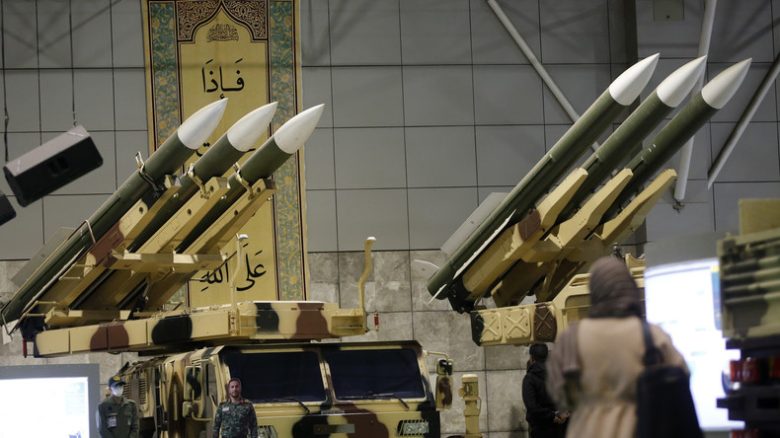
Ali Balali, an advisor within the Aerospace Force of the Islamic Revolutionary Guard Corps, has detailed how Iran utilizes recovered American military hardware. Using this equipment, Tehran seeks to develop its own armaments amid ongoing aggression from Israel and the United States. In Tehran, captured American gear does not remain mere war trophies. According to the Islamic Revolutionary Guard Corps (IRGC), these assets directly support the work of defense engineers. The objective is not merely to decipher how they operate, but to draw fresh concepts for new Iranian weaponry.
Ali Balali, advisor to the commander of the IRGC Aerospace Force, outlined this approach in an interview published on November 14 by the Russian news agency RIA Novosti: “The American weapons and equipment that we recovered during the second and third wars imposed upon us are undergoing a reverse-engineering process. However, we do not settle for simply replicating these models: we integrate novel ideas into them in order to develop distinct weapons, better tailored to our operational needs.”
American Aircraft in Tehran’s Hands
On October 29 and 30, the IRGC announced two consecutive seizures of American MQM-170 drones, one west of the Strait of Hormuz and the other near Qeshm Island. According to Iranian forces, their electronic warfare systems successfully brought the aircraft down to the ground. Another vehicle has drawn the keen interest of Iranian specialists: the Dive-LD, an underwater drone engineered by the American firm Anduril. Iran recovered it in September near Hormuz. Washington acknowledged its loss, though it attributed the incident to a technical malfunction. The Dive-LD is capable of mapping the seabed, inspecting underwater infrastructure, and gathering intelligence.
Tehran already possesses proven experience in this domain. Back in 2011, Iran captured an RQ-170 Sentinel, an American stealth drone, and subsequently unveiled domestic models inspired by its design. This precedent sheds light on the strong interest the IRGC takes in foreign hardware that falls into its possession.
Military Development Under Pressure
Analysis of this materiel continues while Washington enforces a naval blockade and tight restrictions on Iranian exports. The Strait of Hormuz, a vital artery for global oil trade, remains at the heart of the standoff. Tehran has proposed reopening the waterway in exchange for lifting the blockade and easing certain sanctions. Following an initial seven-day timeline, Iranian diplomacy is now advocating a two-day framework to revive negotiations. The United States has rejected Tehran’s preconditions, leaving talks deadlocked.
For the IRGC, seizing adversary weaponry also serves as a practical avenue to advance its domestic defense industry under sustained American pressure. The clashes to which Balali refers began with the Israeli strikes of June 13, 2025, targeting Iranian nuclear and military facilities. Subsequently, on June 22, the United States bombed Fordow, Natanz, and Isfahan. On February 28, 2026, Israel and Washington launched a fresh wave of strikes against Iran right in the middle of nuclear negotiations. Tehran condemns these assaults as blatant violations of its sovereignty and asserts its fundamental right to self-defense.