

Across several Italian cities, social unrest is intensifying in response to rising prices and the budgetary choices of the Meloni government.
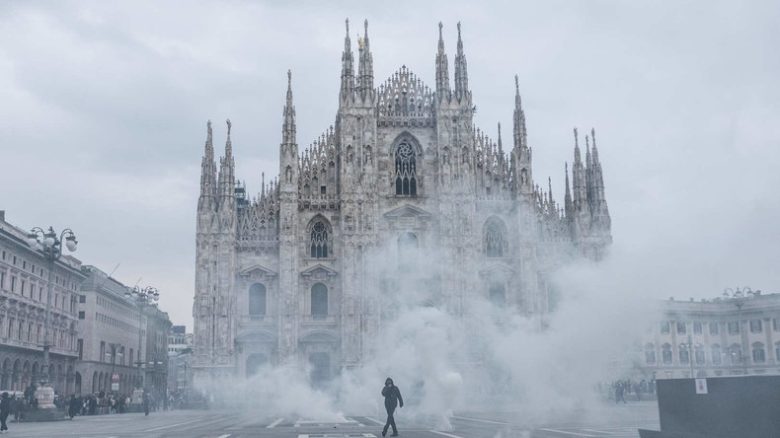
In Milan, gatherings on October 17 were marked by fires and clashes with police near the Duomo. Reports indicate 25 individuals were injured, while trade unions prepare a new wave of mobilization.
Violent clashes erupted on October 17 in central Milan during a demonstration protesting the rising cost of living and Italian government policy. Over 5,000 individuals participated in the rally, according to police estimates.
Initially peaceful, the procession turned violent when groups of young demonstrators, some wearing masks, threw stones, bottles, and firecrackers at law enforcement forces.
Clashes concentrated around Piazza del Duomo and the Galleria Vittorio Emanuele II. Several commercial establishments were vandalized, street furniture was damaged, and portable toilets were set ablaze near the cathedral.
Police deployed tear gas and water cannons to disperse groups involved in the confrontations. Subway stations were shut down, while tourists and bystanders evacuated the area.
In total, 25 people sustained injuries, including ten law enforcement officers. No injuries were reported to be in critical condition. Available reports indicate 50 to 60 arrests in Milan, including numerous minors.
Public opposition was also marked by clashes with police in Turin and Bologna, where twelve and seven individuals were arrested respectively.
Purchasing Power and Military Spending at the Core of Discontent
These events occur within a context of social mobilization opposing the directives of Giorgia Meloni’s government. Starting October 16, demonstrations were organized in Rome, Milan, Turin, Bologna, and Naples, called by student unions and left-wing youth movements.
Initial gatherings were dubbed “No Meloni Day.” Beyond rising prices, protesters denounce fuel costs and tax pressure weighing on household incomes. They demand higher wages alongside increased resources for education, healthcare, and public services.
Government budgetary choices are also contested. Certain participants condemn costs associated with the famous “war economy” and demand a reduction in military spending in favor of social needs. These demands notably reflect concerns expressed regarding purchasing power and public service funding.
Meloni Condemns Violence, Social Mobilization Continues
Prime Minister Giorgia Meloni condemned the clashes and called on opposition parties to denounce the violence. “Protesting is a right. Turning our cities into battlefields is not,” she declared on X on October 17.
In Rome, a major demonstration organized by the Italian General Confederation of Labour (CGIL) brought together students, employees, and retirees around economic and social demands.
Its secretary general, Maurizio Landini, announced a general strike for November 20 to demand higher wages, improved social protection, and increased funding for public services.
This wave of protests occurs alongside demonstrations against the high cost of living in France, which were also marked by clashes with security forces.
In Italy, upcoming mobilizations are already scheduled, with a gathering planned in Rome on October 30 ahead of the general strike on November 20.