

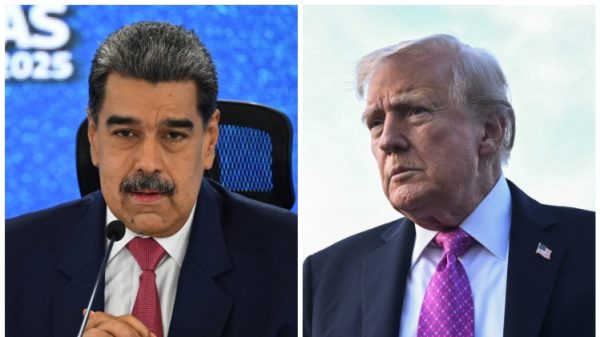
Once again, international law is flouted and trampled, as it has been since the end of World War II by the United States. The contempt is total toward international conventions, the United Nations Organization, and especially state sovereignty. The worst scenario dreaded by the international community was executed yesterday by the American administration in Venezuela, following a clear-cut aggression against this country and the arrest of its democratically elected president Nicolas Maduro, his wife, and part of his staff.
President Donald Trump, dressed as a gangster, announced it openly and proudly, as if it were a Yankee trophy to display before his accomplices, without caring about the horrific image the USA projects to the rest of the world.
After months of direct interference, collusion with internal opposition forces, and a maritime and air blockade against the land of Bolivar, American forces launched large-scale attacks, raids, and bombings on several sites.
Obviously, betrayal within local political circles is no longer in doubt and even played a determining role in this aggression synonymous with regime change.
The United States, true to their bellicose tradition in South America (considered their backyard), are merely reproducing a classic interventionist pattern over 70 years old. Actively and directly involved in dozens of coups that shook Central and Latin American countries, the White House has now crossed another threshold in injustice, as it did in 1989 when its army invaded Panama, captured President General Manuel Noriega, and exfiltrated him to the United States. In a sham trial, Noriega was judged and condemned for “drug trafficking.” This is the same accusation leveled against Nicolas Maduro by Donald Trump.
Beyond the aggression against a sovereign country and the arrest of its elected head of state, observers now question the future of international relations in this context of contempt for the law, the role of UN institutions in maintaining world peace and entities. What remains of independences and sovereignties when third countries capture an elected president, exfiltrate him, judge him, and condemn him?
It is clear that the logic of force and impunity reigns supreme at the start of the third millennium, as evidenced by the genocidal crimes of the Zionist entity in occupied Palestine and its multiple aggressions throughout the Middle East region, in Iran, Syria, Lebanon, Yemen, and even Qatar.
In political circles, it is known that Trump, since his return to the White House, targets the underground riches of several regions around the world, like vast Greenland administered by Denmark. He said it and assumes both these statements and his projects. Why is Venezuela targeted now? This country holds some of the world’s largest reserves, possibly first place ahead of Saudi Arabia. American estimates spoke of 1,360 billion barrels of oil in Venezuela’s subsoil, of which 514 billion are technically exploitable, representing more than a third of the planet’s oil reserves.
These American violations of the UN Charter have triggered a wave of reactions worldwide. After Cuba and Iran, Moscow strongly condemned the US operation. In a statement, the Russian Foreign Ministry denounced an “act of armed aggression” against Venezuela, affirming that Latin America must remain a zone of peace. Moscow insisted on Venezuela’s right to determine its future without any external interference, particularly military, while declaring itself ready to support dialogue between the concerned parties.
In Europe, much concern is expressed. Italy indicated it is closely following the evolution of the situation, with particular attention to the Italian community living in Venezuela, while Berlin stated it is monitoring the situation with “deep concern.” Madrid, for its part, also reacted through its Foreign Ministry, affirming it is in constant contact with its embassy, consulate, and consular emergency unit in Caracas to monitor the situation of the Spanish community