

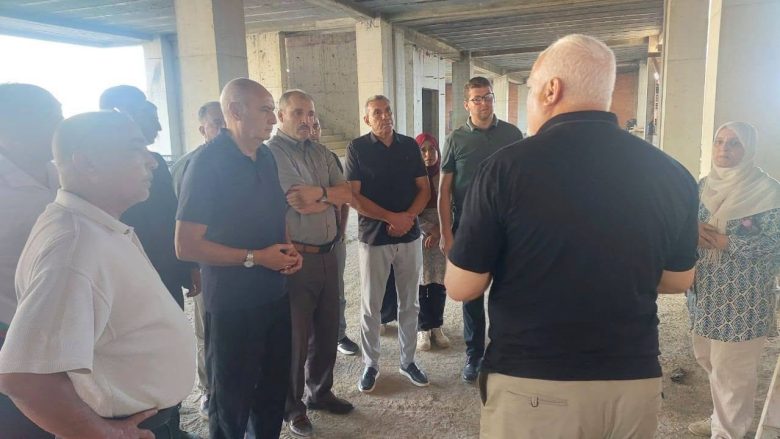
As the social restart approaches, monitoring of priority development projects is intensifying across provinces. In housing, health, education, water, roads, and urban planning, governors are mobilized on the ground to unblock bottlenecks, accelerate construction sites, and ensure the swift commissioning of infrastructure. This was announced on Saturday by the Ministry of Interior, Local Authorities, and Transport.
With a few weeks remaining before the return to full activity, the government intends to maintain pressure on the ground to inject fresh momentum into regional development. Governors are stepping up coordination sessions and site visits to evaluate program progress, pinpoint delays, and implement necessary corrective actions. This mobilization aligns with instructions from Minister of Interior, Local Authorities, and Transport Said Sayoud, aimed at “establishing a culture of field monitoring and accelerating the execution pace of priority programs.” The core strategy focuses on strengthening direct oversight of operations while grounding project supervision firmly in operational realities.
This push comes at a critical juncture in the national calendar. The seasonal transition marks a progressive resumption of activities across multiple sectors, typically accompanied by heightened demand for public amenities. Within this context, the condition of infrastructure and the capacity of local authorities to swiftly open completed facilities carry significant weight.
Monitoring thus covers several sectors considered essential to daily civic life. The ministry specifically cites housing, healthcare, education, water resources, urban development, and road networks.
Field visits allow officials to verify completion rates, evaluate work velocity, and identify obstacles likely to compromise delivery schedules. The objective extends beyond simply measuring progress on construction sites; it involves acting directly on factors that slow execution. Local leaders are instructed to “inventory bottlenecks and deploy measures to clear them,” in coordination with relevant stakeholders.
To this end, firm directives have been issued to contractors, technical departments, and key partners to “adhere to execution deadlines, comply with quality standards, and accelerate construction speed.” Meeting target dates remains a top priority, though it must proceed alongside high construction quality for delivered infrastructure.
In the education sector, which is directly impacted by the upcoming academic return, this acceleration takes on immediate relevance. Ensuring the availability of academic facilities, concluding ongoing operations, and managing local constraints demand heightened vigilance from authorities leading up to the start of classes.
The same framework applies to healthcare, water management, housing, and transport, where multiple projects must be completed or brought into service to expand public services. For municipal leadership, the primary challenge involves preventing finished facilities from sitting idle or allowing projects to stall due to easily solvable issues.
This heightened field presence of governors also reflects a push to increase accountability among regional development actors. Regular monitoring aims to anticipate difficulties, improve cross-sectoral coordination, and provide rapid solutions to problems encountered on site.
The ministry frames this momentum as part of an effort to “instill more effective field governance,” while ensuring the “effective execution of development programs” and boosting regional growth.
This approach responds equally to demands for local responsiveness. Development projects must yield tangible results in the daily lives of citizens. Consequently, the mandate set by the ministry targets results-oriented local action, aiming to “fulfill citizen expectations” and “improve living standards” across the nation’s regions through consistent oversight and accelerated implementation of key priorities.